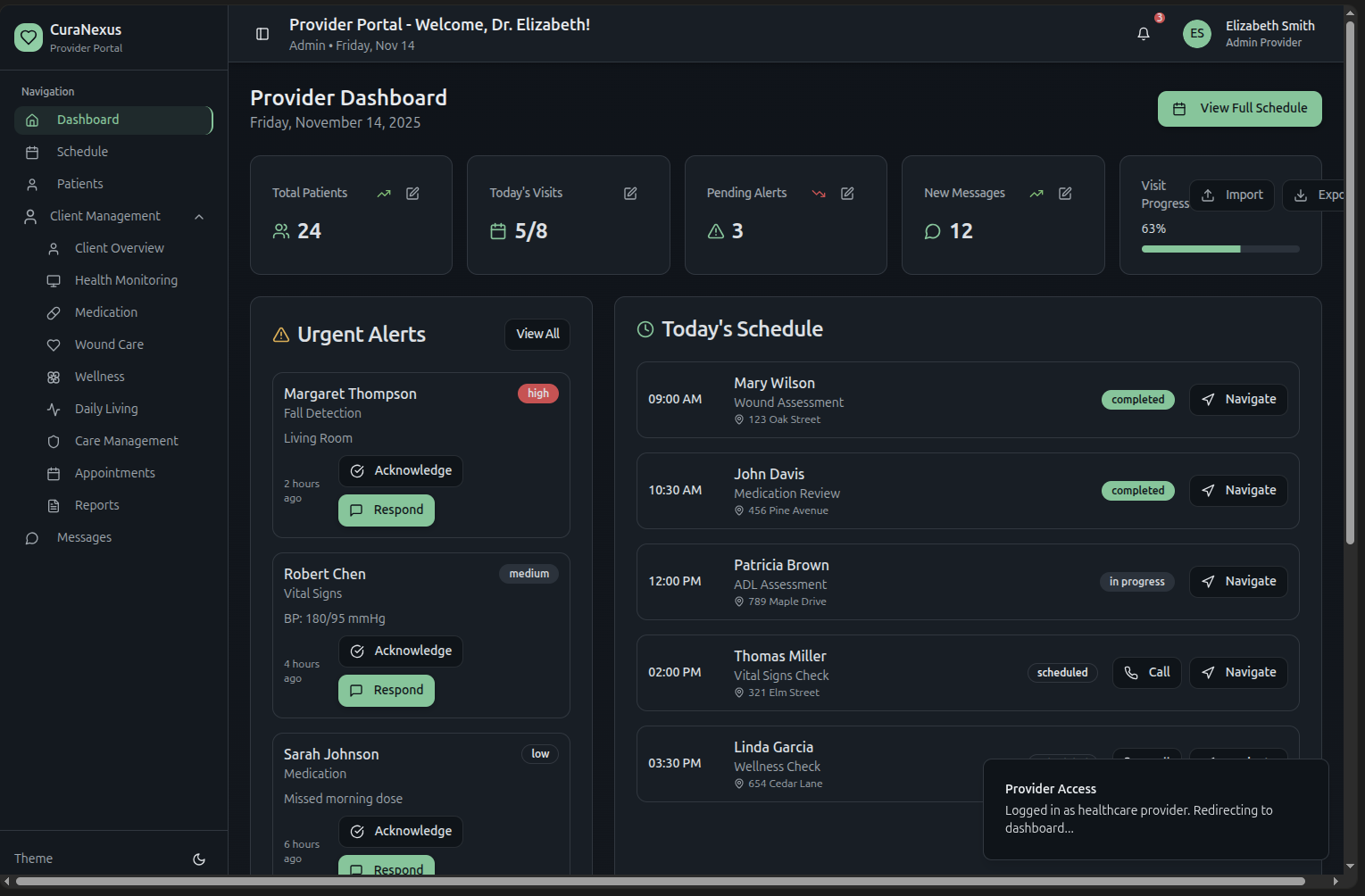
Your nurses spend more time charting than caring.
We built CuraNexus™ to fix that. A complete clinical platform for home health agencies — documentation, scheduling, medications, care plans, and an AI assistant that actually understands your patients.
The problem
The home health industry runs on fax machines. That is not hyperbole — a referral arrives by fax, gets re-typed into a spreadsheet, and eventually makes it into an EHR system that was designed for a hospital, not a nurse visiting someone's home.
Meanwhile, the nurse who actually visits the patient spends 40% of every shift typing into a screen instead of caring for the patient in front of her. 92% of nurses say their EHR is crushing their job satisfaction. Agencies then spend $15–25 per chart on offshore QA review to catch the documentation gaps that their own EHR failed to flag before submission. That is a direct labor cost that should not exist. Source: Black Book Research 2025, national survey of 9,000+ U.S. nurses.
Revenue leaks from every seam. Authorizations expire because nobody tracked them. Claims get denied because the documentation was incomplete. Referrals sit in fax queues for days. Every one of these is recoverable revenue — thousands per month — that agencies write off because their systems cannot keep up.
And then there is compliance. Home health is one of the most regulated corners of healthcare. In Canada, PIPEDA and provincial health privacy legislation govern every patient record. In the UK, CQC inspects every domiciliary care provider, UK GDPR applies to every data point, and the NHS Data Security and Protection Toolkit is mandatory for anyone processing NHS data. Legacy EHR systems treat compliance as a checkbox. It should be the foundation.
The vendors who dominate this market — charging $200–500 per clinician per month — built their platforms a decade ago. Clinicians hate using them. Agency owners cannot see their own data. And nobody has built AI into the workflow in a way that is actually private, audited, and clinically aware.
The chart
Clinical Documentation
AI-assisted SOAP notes from voice or text. Documentation completeness scoring flags gaps before submission. Ambient scribing turns conversations into structured clinical notes — so nurses chart less and care more.
Patient Management
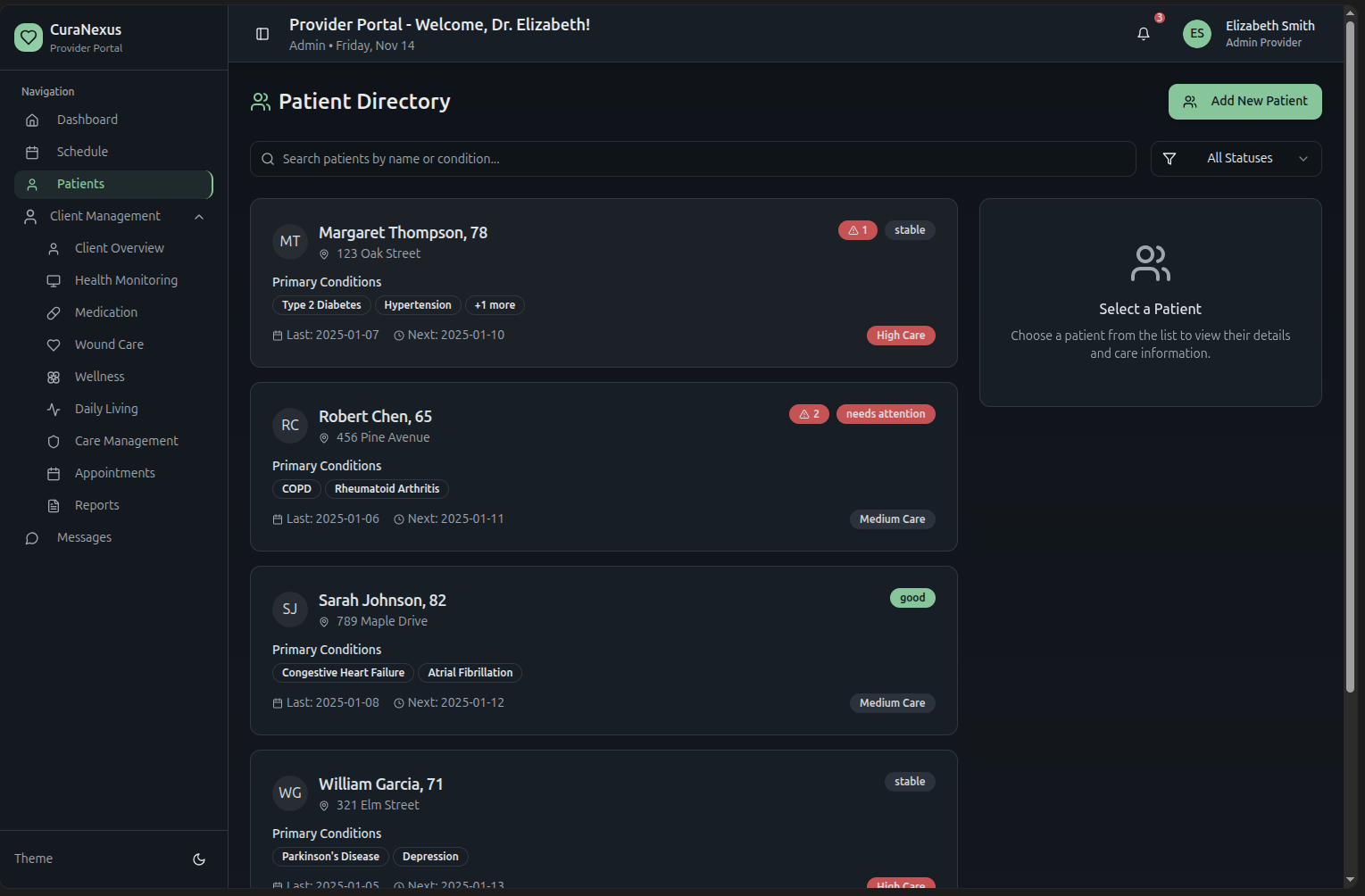
Unified longitudinal records — demographics, coded conditions, medications, vitals trending, allergies, family history, and care plans. Everything a clinician needs about a patient, across every visit, in one view.
Care Coordination
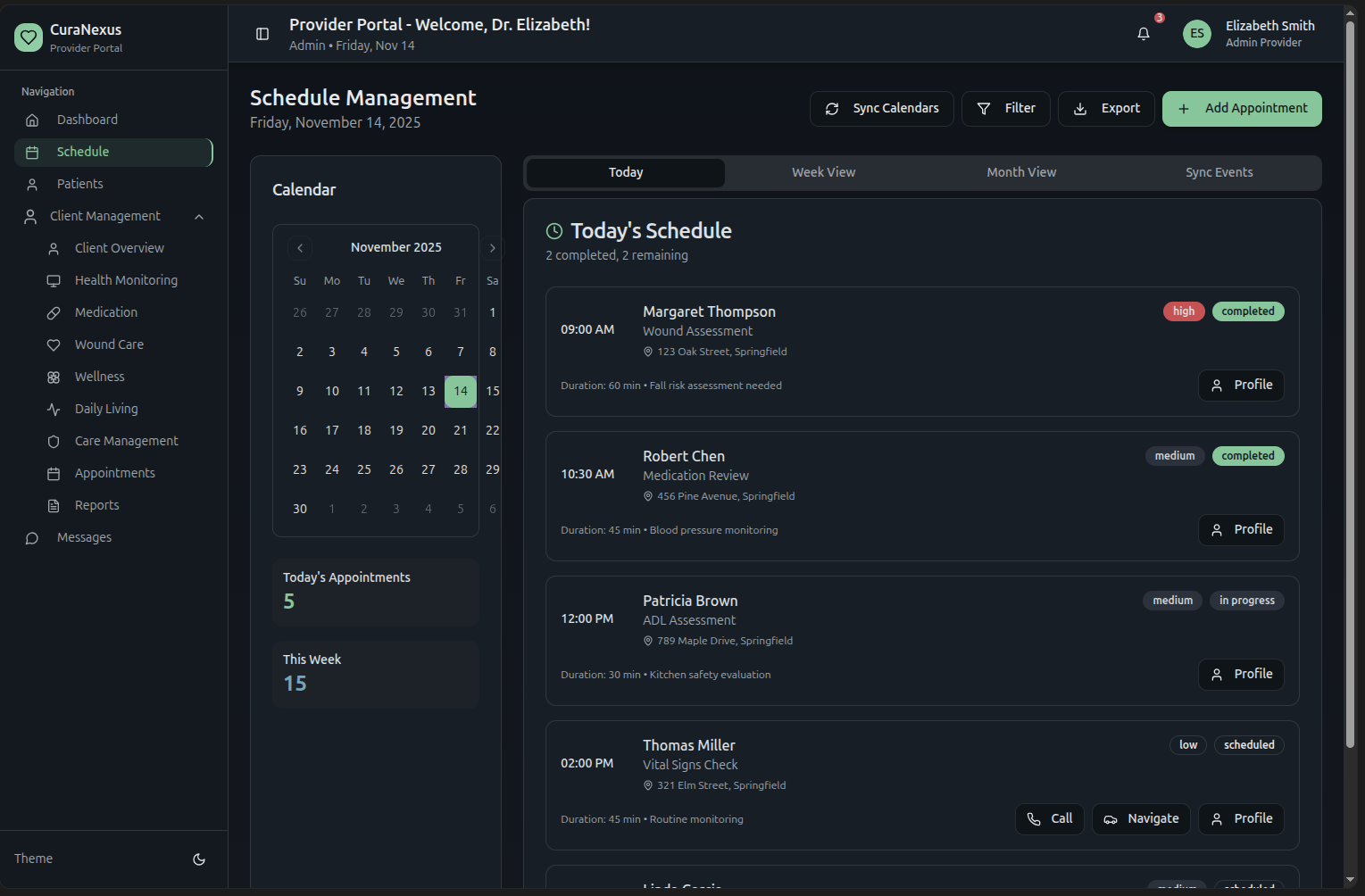
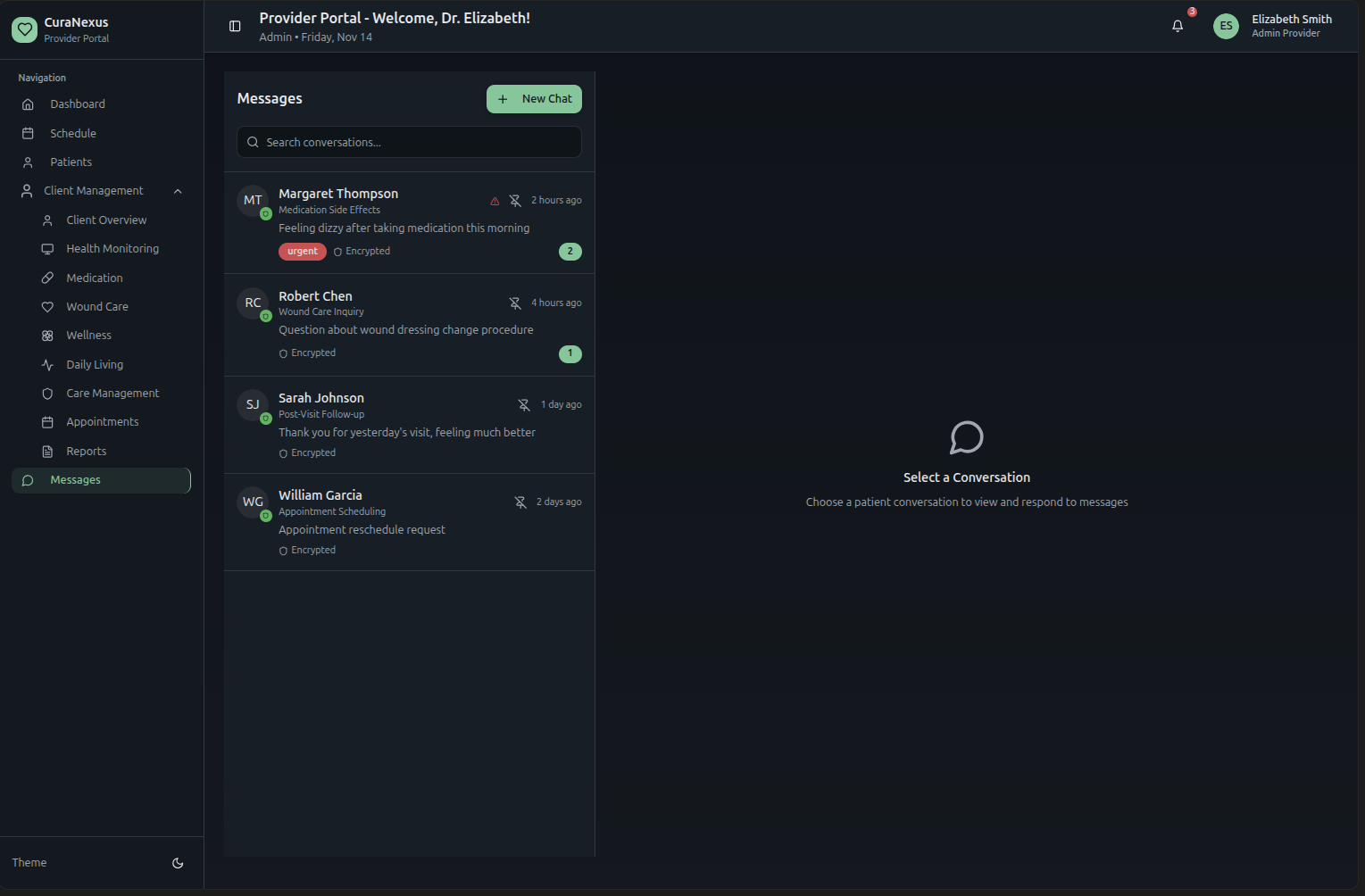
Scheduling with clinician assignment, secure messaging with threading, and a complete care team directory. Coordinate visits and hand-offs across your entire agency from one screen.
Medications & Wound Care
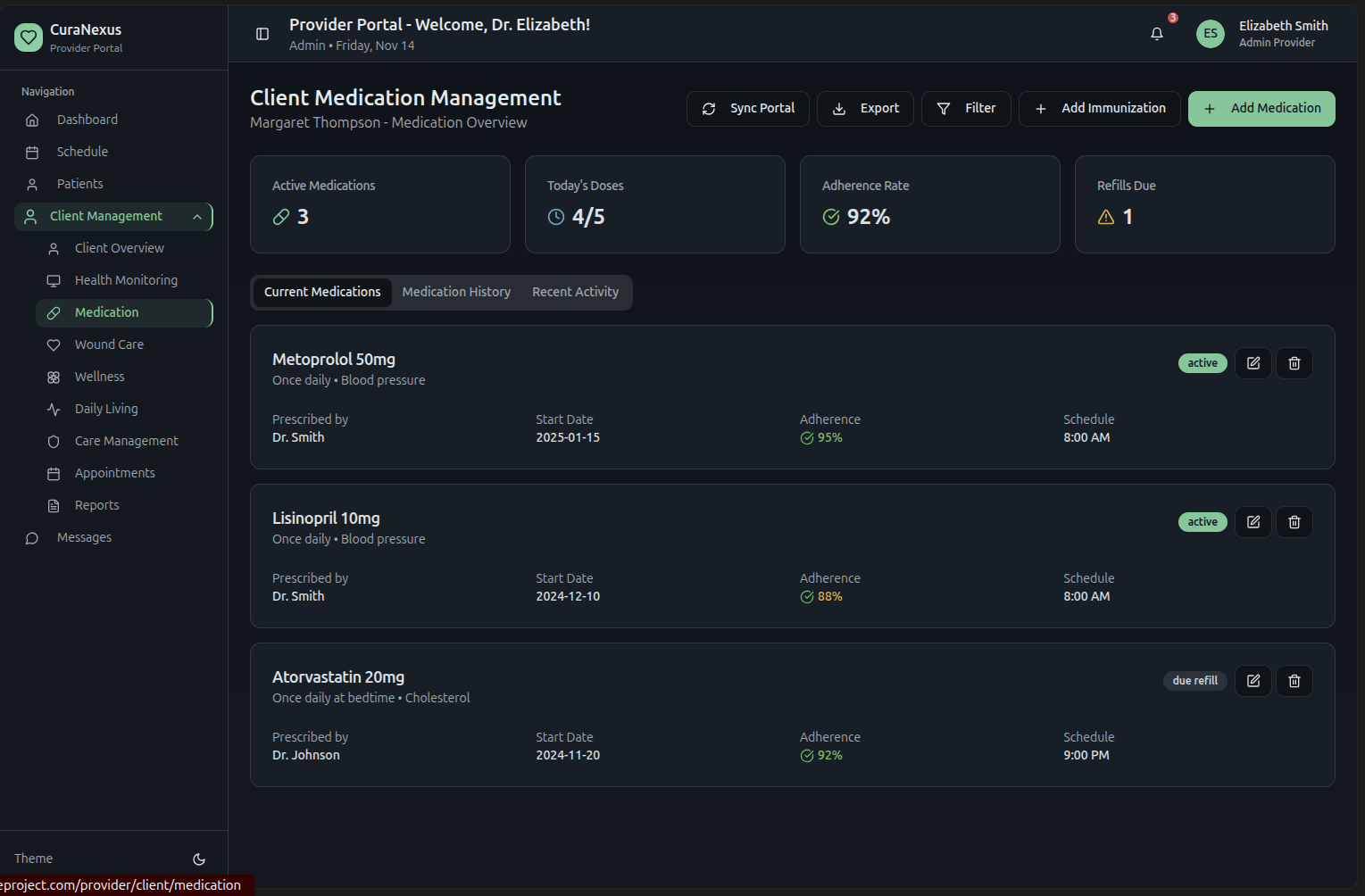
Medication administration records with nurse identity verification. Photo-based wound assessment with measurement tracking. Safety checks automatically flag conflicts before they reach the patient.
AI Clinical Assistant
An AI assistant that understands your patient's full clinical picture — conditions, medications, allergies, vitals, history. Ask questions, generate notes, check documentation completeness. Private. Audited. Clinically aware.
Clinical Documentation
AI-assisted SOAP notes from voice or text. Documentation completeness scoring flags gaps before submission. Ambient scribing turns conversations into structured clinical notes — so nurses chart less and care more.
Patient Management
Unified longitudinal records — demographics, coded conditions, medications, vitals trending, allergies, family history, and care plans. Everything a clinician needs about a patient, across every visit, in one view.
Care Coordination
Scheduling with clinician assignment, secure messaging with threading, and a complete care team directory. Coordinate visits and hand-offs across your entire agency from one screen.
Medications & Wound Care
Medication administration records with nurse identity verification. Photo-based wound assessment with measurement tracking. Safety checks automatically flag conflicts before they reach the patient.
AI Clinical Assistant
An AI assistant that understands your patient's full clinical picture — conditions, medications, allergies, vitals, history. Ask questions, generate notes, check documentation completeness. Private. Audited. Clinically aware.
Why this
works
Most EHR vendors bolt on a chatbot and call it AI. Ours is different — the AI runs privately on your infrastructure, understands each patient's full clinical picture, and is subject to the same audit logging and access controls as every other clinical action. No patient data is ever sent to external AI services. It generates notes, flags documentation gaps, and answers clinical questions in context — because it was built into the platform from day one, not added after.
An agency cannot bill without referrals. Today, most agencies track intake on spreadsheets and fax queues. Authorizations expire because nobody was watching. Claims get denied because the documentation was incomplete. CuraNexus replaces that with a clean pipeline — referral intake, eligibility checks, authorization tracking — every step from referral to payment, visible and tracked. The revenue your agency is leaving on the table becomes recoverable.
The person who signs the checks does not chart. They need to see what is happening across their agency — revenue pipeline, documentation turnaround, compliance posture, staff productivity — without digging through clinical records. CuraNexus gives agency owners a real-time operational view. When unsigned notes are costing you $23,000 this quarter, you should know before the quarter ends.
Who's behind this
Built by a team of 8 across engineering, security, AI, and marketing — based in Canada, expanding to the UK.
CuraNexus™ was built by people who saw nurses spending more time on paperwork than patients. The platform is in active development and available for early-access partners who want something better.
Meet the teamCommon questions
How is CuraNexus™ different from legacy EHR systems?
Legacy vendors built their platforms a decade ago for hospitals, then adapted them for home health. CuraNexus was built from scratch for home-based care — with AI documentation, offline support for field clinicians, and a referral-to-revenue pipeline designed around how agencies actually operate.
Is my patient data safe with CuraNexus?
Yes. The AI runs on-premise on your own infrastructure — patient data never leaves your environment. Every action is logged with a full audit trail. The platform is being built to align with PIPEDA, UK GDPR, and NHS DSPT requirements, though we have not yet undergone formal certification.
Can CuraNexus integrate with our existing systems?
CuraNexus is built on HL7 FHIR R4 standards for interoperability. We work with you to connect to your existing clinical systems, referral sources, and billing workflows during onboarding.
When can I start using CuraNexus?
CuraNexus is in active development and we are onboarding early-access partners. If you are interested in being one of the first agencies on the platform, reach out — we are looking for partners who want to help shape the product.
Do you support home health agencies in the UK?
Yes. CuraNexus is being built for both Canadian and UK markets. We are designing the platform to align with CQC inspection requirements, UK GDPR, and NHS DSPT standards. Formal compliance verification is part of our roadmap.
What size agency is CuraNexus built for?
CuraNexus serves agencies from 10 to 500+ clinicians. The platform scales with your team — from solo clinician practices to multi-location agencies with complex scheduling and compliance needs.
Have a question we didn't answer? Get in touch
See the chart.
We'll walk you through CuraNexus™ — the clinical workflows, the AI assistant, and where the platform is heading.